Learn Short-Term Investing From a Pastor, With a Plan That Honors Your Faith
A guided options income plan for Christians who want steady, realistic income growth—without gambling, hype, or endless screen time.

Trusted by pastors, missionaries, and church leaders worldwide
If You Love Jesus and Also Want More Income… You’re Not Crazy
You’ve given your life to ministry and serving others. You live modestly. You trust God to provide. But you also feel the weight of retirement, college, and future expenses, and you wonder if learning short‑term investing is wise, or if it will pull your heart in the wrong direction.
This is probably for you if...
You’ve dabbled in investing or trading but never found a plan you trust.
Some months you’re up, then you give it all back, and your balance trends sideways or down.
You want more income, but not at the cost of your peace, your integrity, or your calling.
A Guided Income Plan Built on Biblical Wisdom, Designed for Steady Income
This membership helps faith‑driven traders pursue consistent monthly income over time by combining four biblical guardrails, a simple market lens, defined‑risk options spreads, and a fixed‑ratio compounding plan.
Faith-Based Guardrails
Four principles from Proverbs shape every decision: risk comes first, discipline is non‑negotiable, trade the long view, and never treat trading as something you can simply copy.
Defined-Risk Strategies
Every trade uses simple spread structures with a clearly defined maximum loss before you ever enter. If the risk isn’t clear, the trade doesn’t happen.
A Clear Compounding Plan
Position size grows only after realized profits justify it, using a fixed‑ratio approach that favors steady progress over emotional swings.
How the System Works
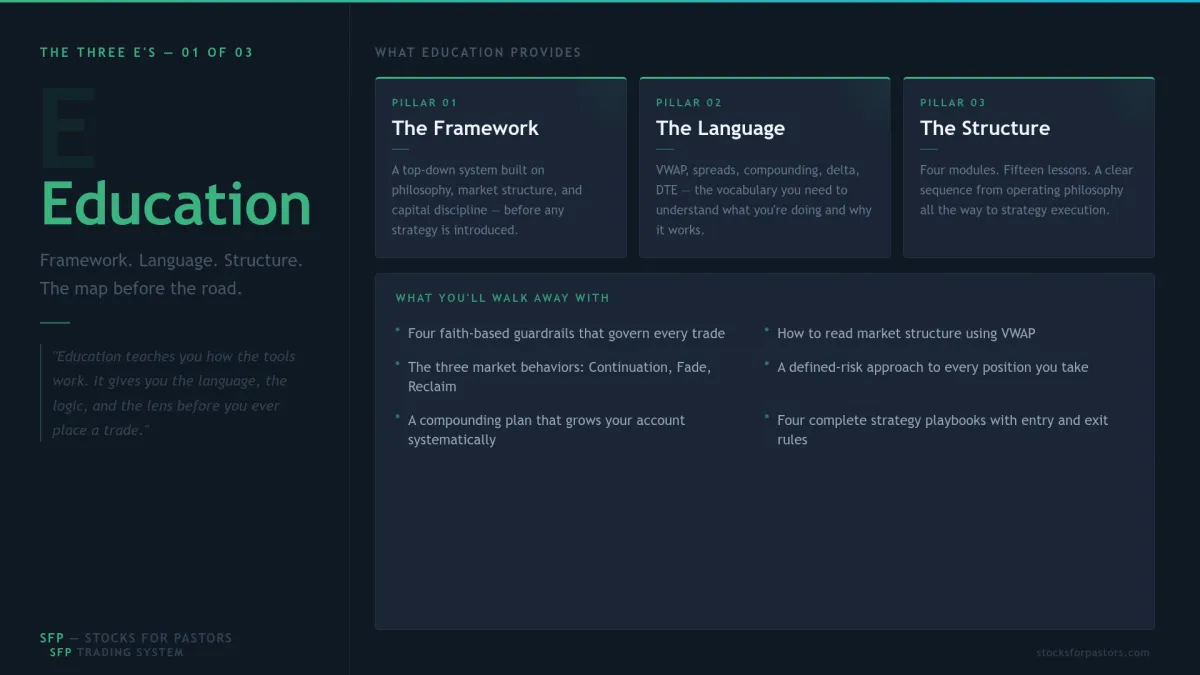
Step 1: Get the Map
Short, focused lessons give you the framework, language, and structure: faith‑based principles, VWAP market lens, risk rules, and strategy playbooks, so you’re not guessing or piecing together random strategies.
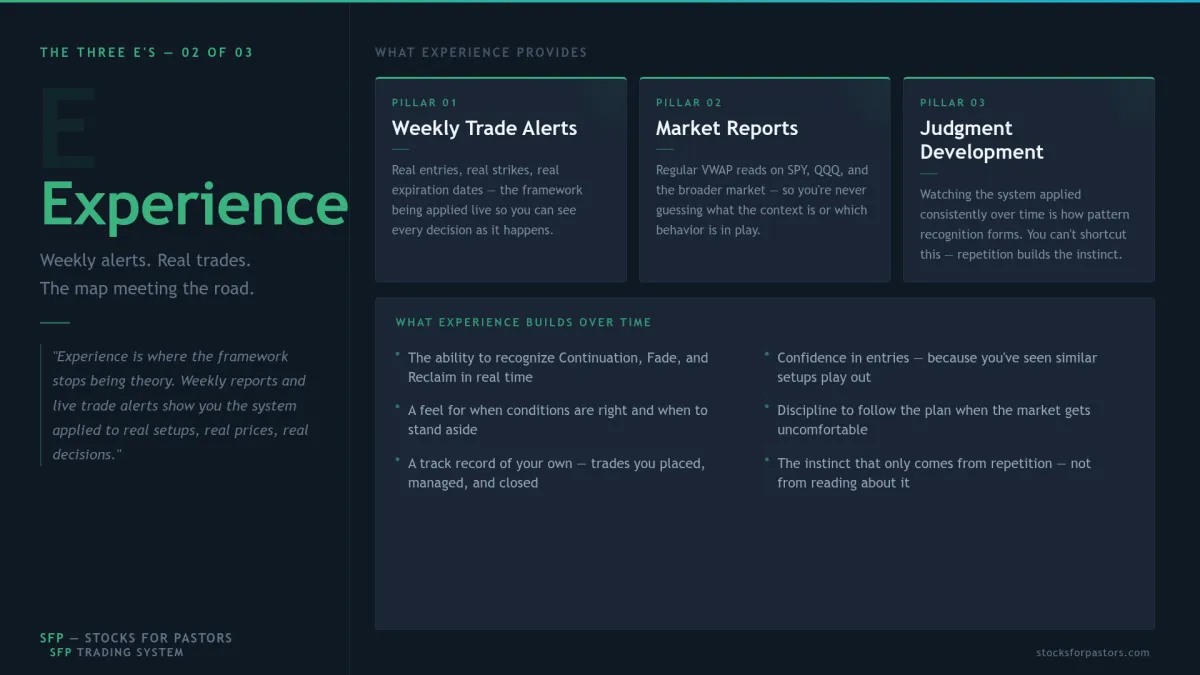
Step 2: See Real Trades
Weekly reports and trade alerts show you the exact setups, entries, and exits, with risk defined in dollars, so the map meets real trades so you can see how those principles look in real trades.
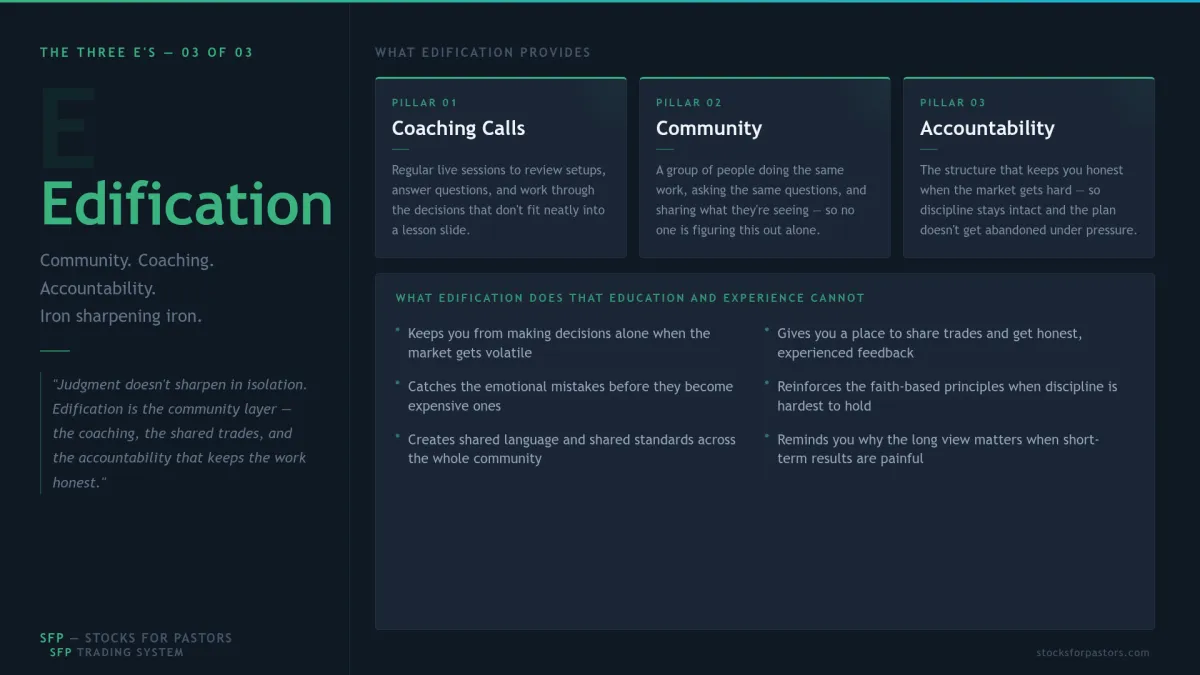
Step 3: Grow in Community
Live coaching calls and a like‑minded community help you stay disciplined, process emotions, and keep your trading aligned with your faith so discipline and peace can grow alongside your skill.
Read Our Latest Blogs
Lorem ipsum dolor sit amet, consectetur adipiscing elit.

The Verdict That Matters: What 1 Corinthians 4 Teaches About Freedom From People's Opinions
We find freedom when God's opinion becomes more important than everyone else's.
Every day, whether we realize it or not, we live in search of a verdict. We look for it in the words people speak, the invitations we receive, the criticism we can't seem to forget, and even the silence we don't know how to interpret. We replay conversations, analyze facial expressions, and quietly wonder if we've disappointed someone without ever asking. Before long, we begin measuring ourselves by the opinions of the people around us.
This search for approval doesn't stay confined to our ministry roles. It follows us into every area of life. We wonder if we're good parents, faithful friends, capable leaders, or successful employees. We ask ourselves if we've done enough, said enough, or simply are enough. It's as though we spend our lives standing before an invisible jury, waiting to hear the verdict.
The problem is that the jurors never seem to agree. One person admires your convictions while another finds them offensive. One appreciates your quiet faithfulness while another wishes you were more visible. The same decision that earns praise from one person may invite criticism from someone else. If our identity depends on such verdicts, our confidence will rise and fall with every changing opinion.
There is nothing wrong with longing for encouragement. God created us for relationship, and Scripture repeatedly calls believers to build one another up (Ephesians 4:29; 1 Thessalonians 5:11). The problem begins when we ask people to give us something only God can provide. We begin looking to them for a verdict, quietly handing over the authority to determine our worth, faithfulness, and even identity. Perhaps that's why Proverbs reminds us,
"The fear of man lays a snare, but whoever trusts in the LORD is safe." (Proverbs 29:25, ESV)
The fear of man is a trap because it convinces us that our security depends upon receiving the right verdict from the right people. But what if we've been asking the wrong jury all along?
Paul addressed this idea in one of the most surprising passages in the New Testament.
A Courtroom Full of Unauthorized Judges
Writing to the church in Corinth, Paul responded to criticism that had been directed toward his ministry. Different groups within the church were comparing Christian leaders, evaluating their ministries, and deciding who was most worthy of admiration. In other words, they were doing what people have always done. They were handing out verdicts. As we consider Paul's response, it's easy to see how we naturally think the same way.
Most of us live as though life is a courtroom. Every conversation becomes testimony. Every success becomes evidence. Every failure feels like another exhibit presented before the jury. Day after day, we find ourselves trying to build a case that proves we are enough. The members of the jury may change, but the experience remains the same. Sometimes it's our family. Sometimes it's our church. Sometimes it's our coworkers or complete strangers online. Sometimes the loudest voice in the courtroom is our own. No matter who occupies the jury box, we find ourselves waiting for someone to declare whether we've passed or failed.
That mindset quietly shapes the way we live. We become defensive because we're protecting our case. We become exhausted because we're constantly gathering more evidence. We become discouraged because no amount of evidence ever seems to be enough. Most tragically, we become so preoccupied with defending ourselves before people that we lose sight of the only worthy Judge.
Into that courtroom, Paul speaks these remarkable words:
"But with me it is a very small thing that I should be judged by you or by any human court..." (1 Corinthians 4:3, ESV)
Paul had been criticized, questioned, and misunderstood. His ministry had been placed under a microscope, yet instead of defending himself, he calmly says, "It is a very small thing that I should be judged by you." At first, those words almost sound dismissive. Is Paul saying he doesn't care what anyone thinks? Not at all. He is laying the foundation to deliver one of the most liberating truths in the Christian life.
Paul isn't minimizing holiness, rejecting accountability, or claiming perfection. He's recognizing something we often forget: not everyone with an opinion has been given the authority to render a verdict.
Before we ask whether someone's assessment is accurate, we should first ask a more important question:
"Have they actually been given the authority to define me?"
The Freedom of a Different Judge
Paul's statement becomes even more remarkable as he continues.
"But with me it is a very small thing that I should be judged by you or by any human court. In fact, I do not even judge myself." (1 Corinthians 4:3, ESV)
That last sentence can sound almost shocking. "I do not even judge myself." At first glance, it might seem as though Paul is dismissing self-examination, but we know that he instructs believers to examine themselves in 2 Corinthians 13:5, so that can't be his meaning. The issue is not whether Christians should evaluate their lives. The issue is who has the authority to pronounce the final verdict.
Paul is distinguishing between evaluation and verdict.
As Christians, we are called to evaluate our lives in light of God's Word. We should invite the Holy Spirit to expose sin, welcome loving correction and accountability, and pursue repentance when we fall short. But evaluating our hearts is very different from pronouncing the final verdict over our lives. That authority belongs to God alone.
Paul continues,
"For I am not aware of anything against myself, but I am not thereby acquitted. It is the Lord who judges me." (1 Corinthians 4:4, ESV)
What incredible humility. Paul isn't claiming perfection. He's acknowledging that neither his own opinion nor anyone else's has the authority to declare the final word about his faithfulness. As far as he knows, he has been faithful, but even his own conscience is not the standard. Only the Lord can judge with perfect righteousness.
How different is that from the way we often live? When criticism comes, we instinctively begin building our defense. We replay conversations, justify our motives, and gather evidence for our case. Or, we swing to the opposite extreme and become our own harshest prosecutor, allowing every failure to reinforce what we already fear about ourselves.
Whether we're defending ourselves or condemning ourselves, we're still assuming the same role. We're acting as though we're the judge.
Paul refuses to do either. Instead, he entrusts himself to the only Judge who sees every motive, every hidden struggle, and every quiet act of faithfulness that no one else will ever know. That truth is both humbling and liberating. It humbles us because we cannot declare ourselves righteous through our own performance. It frees us because we no longer have to live under the weight of every opinion that comes our way.
Not every criticism is true. Not every compliment is accurate. Faithful obedience has never guaranteed universal approval. Jesus Himself was misunderstood, falsely accused, and rejected. If the sinless Son of God was criticized, we should not be surprised when our own faithfulness is occasionally misunderstood as well.
The question, then, is no longer, "Do they approve of me?" Instead, it becomes, "Is there biblical wisdom here that the Lord wants me to receive?" If the answer is yes, we respond with humble repentance. If the answer is no, we entrust ourselves to the One who judges justly.
The Judge Became Our Savior
If God alone has the authority to render the final verdict over our lives, one question remains.
"What is that verdict?"
Left to ourselves, the answer would be devastating. Unlike every human judge, God sees everything. He knows every hidden motive, every selfish ambition, every careless word, and every sinful thought. He doesn't merely observe our actions; He weighs our hearts. If our hope rested in our own righteousness, none of us could stand before a perfectly holy Judge.
But this is where the gospel changes everything. Our Judge has done something no earthly judge could ever do. He stepped down from the bench, took on flesh, and willingly stood in the place of the guilty. The One who had every right to condemn us chose instead to bear our condemnation. Isaiah foretold it centuries before Christ came:
"He was pierced for our transgressions; he was crushed for our iniquities... and with his wounds we are healed." (Isaiah 53:5, ESV)
Paul announces the result with breathtaking simplicity:
"There is therefore now no condemnation for those who are in Christ Jesus." (Romans 8:1, ESV)
Those words are more than a promise of forgiveness. They are God's declaration over everyone who belongs to Christ. The Judge has already spoken. Not because we were innocent, but because Jesus bore our guilt and credited us with His righteousness. Through faith in Him, we are justified before God. We no longer stand in the courtroom hoping the evidence will somehow turn in our favor. Christ has already satisfied the justice our sin deserved, and His righteousness has become our own.
That changes the way we respond to every other verdict we encounter. We no longer have to chase approval through accomplishment or defend ourselves against every criticism. We no longer have to pronounce judgment over ourselves every time we fail. The verdict we spend our lives searching for has already been spoken in Christ.
Far from making holiness optional, this truth becomes the foundation of joyful obedience. We pursue Christ not because we are trying to earn God's acceptance, but because we have already received it. The gospel doesn't lower God's standard; it fulfills it through the finished work of Jesus.
Living in Light of the Verdict
Imagine spending your entire life trying to persuade a jury, only to discover they never had the authority to decide your case. That is exactly what Paul is teaching.
The opinions of people are real. They may encourage us, wound us, or even expose areas where we genuinely need to grow. Our own conscience also has an important role, calling us to examine ourselves in light of God's Word. But neither the opinions of others nor our own assessment has the authority to determine our identity. Only God possesses that authority, and for those who are in Christ, He has already spoken.
That truth doesn't make us indifferent to people. Instead, it frees us to love them without asking them to provide what only Christ can give. We can receive encouragement with gratitude, correction with humility, and criticism with discernment because none of those things determines who we are.
What does that look like on an ordinary Tuesday afternoon? It may mean faithfully obeying God even when someone misunderstands your decision. It may mean resisting the temptation to replay every difficult conversation, choosing instead to entrust yourself to the God who judges justly. It may mean receiving both compliments and criticism without allowing either to become the measure of your worth.
Over time, you'll find yourself asking a different question. Instead of asking, "What does everyone think about me?", you'll begin asking, "Have I been faithful to what God has entrusted to me?" That question leads us away from comparison, performance, and people-pleasing. It leads us back to stewardship, back to obedience, and back to Christ.
One day every competing voice will fall silent. The applause will fade, the criticism will be forgotten, and every opinion that now seems so significant will lose its power. Only one voice will remain, and for everyone who belongs to Christ, that voice has already spoken.
In Him you are forgiven. In Him you are accepted. In Him there is no condemnation.
That is the verdict that no criticism can overturn, no failure can erase, and no success can improve. So lift your eyes from the courtroom you've been trying so hard to navigate and fix them on the Judge who became your Savior. Rest in the verdict He has already declared through His Son. Then, walk in joyful obedience, not to earn His approval, but because, in Christ, you already have it.


MEET THE FOUNDER & CEO
Built by a pastor, for Christian leaders. My system makes investing simple, strategic, and aligned with biblical principles.
Michael Shafer's Story:
“Facing the same financial uncertainty common among pastors, I stumbled upon a side hustle 15 years ago that revolutionized not just my finances, but my ability to serve in ministry without the looming stress of financial insecurity. This journey led me to a significant realization: financial freedom and ministry can coexist beautifully.”
But this isn't about Michael's journey...
Here are some real-life stories from others in the community

"His process works!"
“I have done this program consistently for six months now. For the eight out of the last 10 weeks, I have hit my weekly target in profit that allows me to pay a targeted portion of my bills without using my paycheck. Any Pastor should consider working with Michael because it is clear that he 100% cares about helping you make sure your financial future is more secure. There is no other agenda. And his process works!”
- Adam W., Arkansas


"I took control of my IRA"
“Using the method of investing I have learned through the program, we have been able to gain traction in our retirement programs and took control of our IRAs. I did not understand how to invest our portfolios and used mangers that cost 6%+ per year. This created a strain on our retirement during long term down periods in the market. We have gained more than the cost of the program in several days.”
- Aaron S., Oklahoma
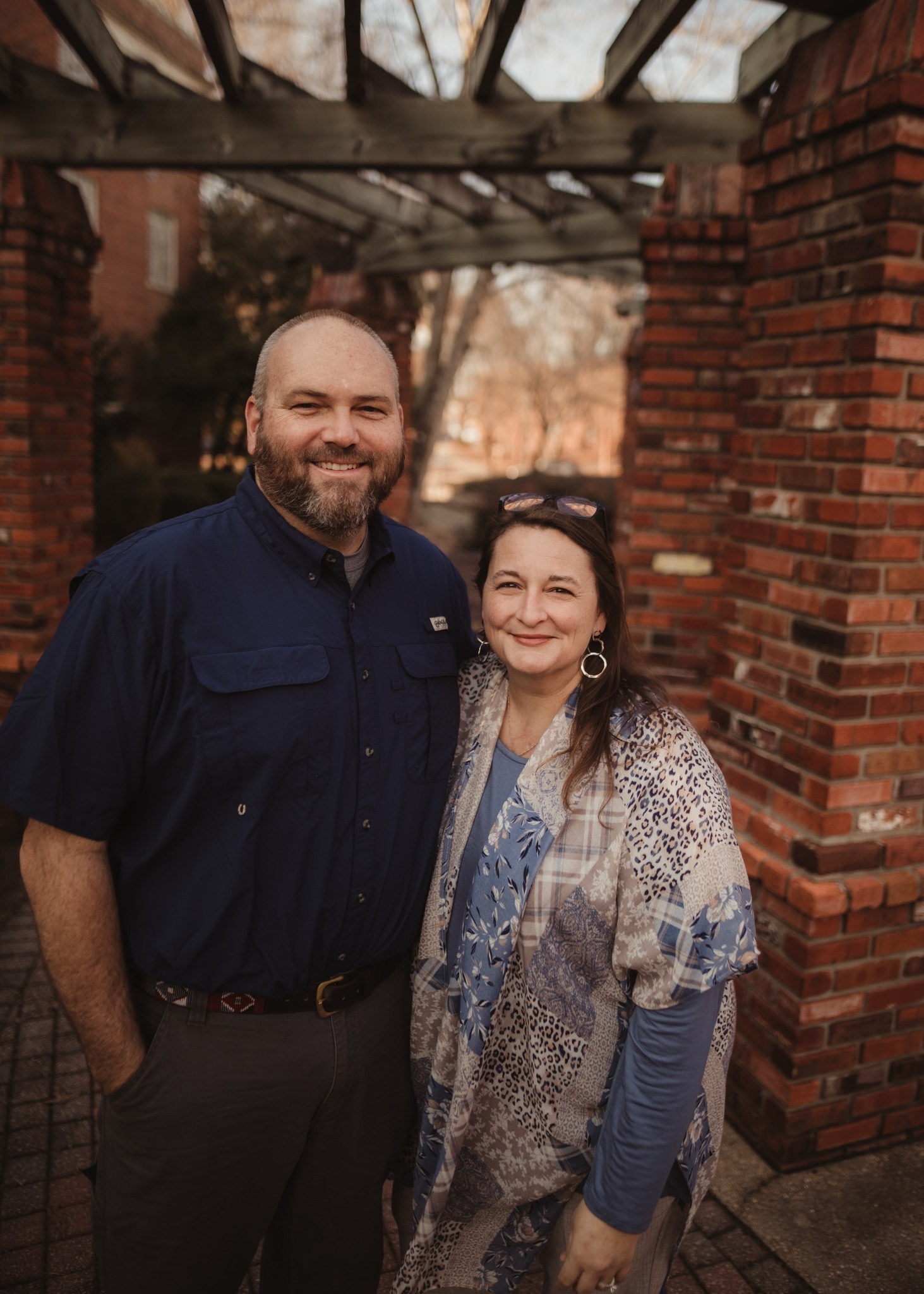
"My account has grown 65.5%!!"
"I made my first trade with real money one year ago. I had $2400 in my account. Closing today’s trade, my account has grown 65.5%!! This year alone it has grown 31.4% in 3 months. I want to say thank you for all you have taught me. I don’t know how often you are told that you are making a difference for pastors/missionaries in the area of finances, but you are definitely helping me."
- Lew J., Kenya

"The side-hustle I've been looking for."
“This has been exactly the kind of side-hustle I was looking for. I needed someone I could trust to teach me how to get more time back and stop doing side gigs that take hours of my time and eat away at my ministry focus. Plus, I make more money with this. A double win!"
- Will D., Arkansas
These stories are individual experiences, not guarantees. Trading involves real financial risk, and many learners will experience losses as they grow. Only trade with capital you can afford to lose.
Choose Your Best Next Step
A. Just Exploring?
B. Brand New to Investing?
C. Ready to See Trades In Real Time?
IMPORTANT RISK DISCLOSURE
Trading and investing involve substantial risk and are not suitable for all individuals. Past performance is not indicative of future results, and no trading strategy, system, or approach can guarantee profits or protect against losses in all market conditions.
Stocks for Pastors and its instructors provide educational content only. We do not provide personalized investment, legal, or tax advice, and we do not make recommendations tailored to any individual’s financial situation. All examples, trade structures, and performance discussions are for educational and illustrative purposes.
Options trading, including spreads, involves defined risk but can still result in the loss of capital. Futures, options on futures, and securities trading carry a high level of risk and should only be undertaken with funds you can afford to lose. You are solely responsible for understanding the risks involved and for all trading decisions you make.
While we strive to present accurate and timely information, Stocks for Pastors makes no guarantees regarding the completeness or accuracy of data, pricing, or market information, which may change without notice. Errors, omissions, or delays may occur due to market conditions or third-party data sources.
All content reflects the opinions of the presenter at the time of publication and may change as market conditions evolve. Nothing presented should be interpreted as a solicitation, recommendation, or endorsement of any specific security or trading strategy.
Trading requires discipline, emotional control, and sound judgment. Even well-structured systems can experience drawdowns and periods of underperformance. Losses are a normal part of trading, and results will vary from trader to trader.
By participating in Stocks for Pastors content, programs, or events, you acknowledge and accept these risks and agree that you are responsible for your own financial decisions.


© 2025 G6 Allies - All Rights Reserved


