Start Investing with Confidence, Even If You’re Brand New
This free bootcamp is your first step toward confident investing. In just a few short lessons, you’ll learn a simple system you can actually use.


Most church leaders feel overwhelmed by money and unsure where to even start.

This bootcamp gives beginners a safe, step-by-step way to invest without jargon or complexity.

Imagine the peace of finally knowing how to grow your savings with confidence and consistency.

What You’ll Learn
How stocks actually work and why you don’t need Wall Street experience to invest.
How to open your first brokerage account with step-by-step instructions.
What seasonal investing is and why it gives beginners a unique edge.
A simple trading system that helps you decide when to buy and sell.
First steps for new investors so you can start with confidence, not confusion.
Why Seasonal Investing Works
Seasonal investing is built on predictable, recurring patterns in the market. Think of it like planting in the right season: some months are better for certain stocks than others. By learning these patterns, you can make informed trades that reduce guesswork and increase confidence.
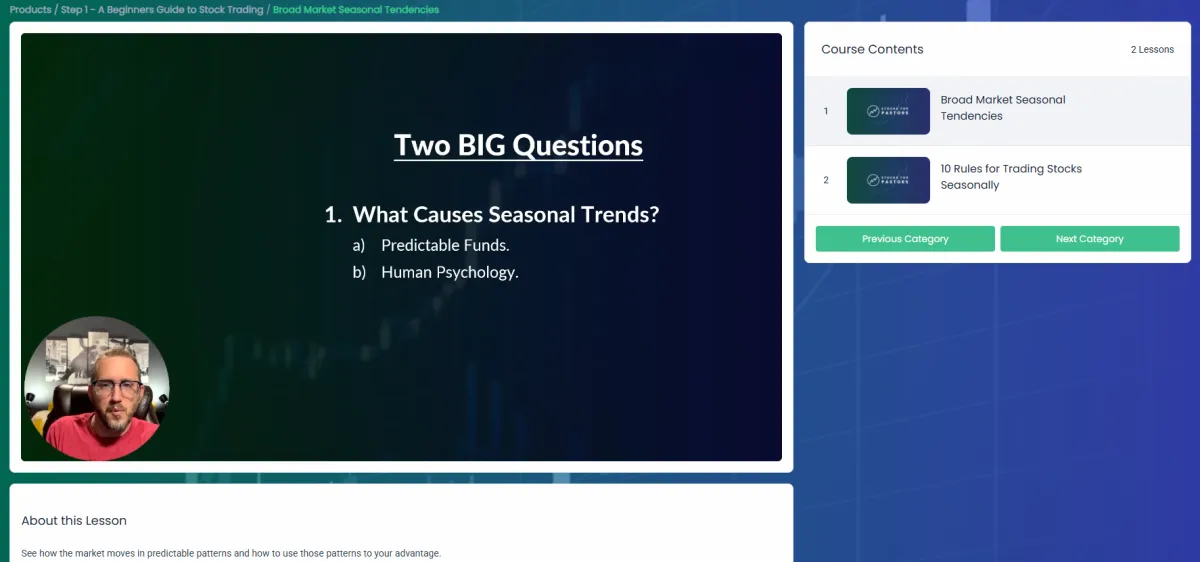
This training walks you through the process step by step, so you can take advantage of these patterns without spending hours in front of charts.
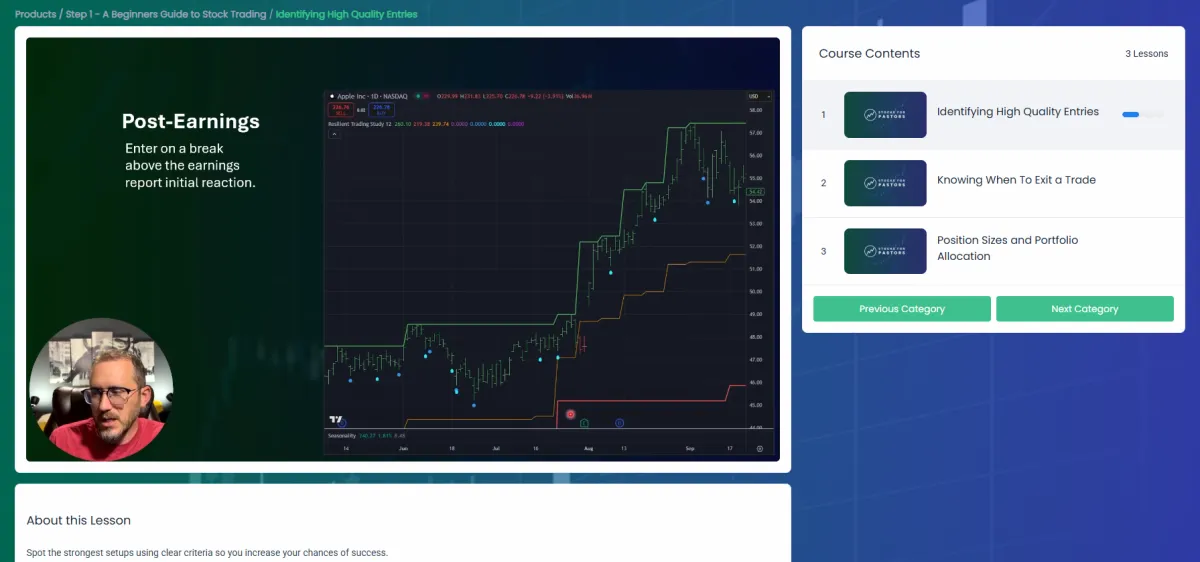
This Bootcamp was built for busy leaders who don’t want another endless online course. It’s short, focused, and designed to get you moving right away.
Who This Is For?
The First-Time Investor
You’ve never bought a stock in your life, and you want someone to walk you through the basics without making you feel dumb.The Frustrated Dabbler
You’ve bought stocks here and there, maybe even followed tips or trends, but you’ve never seen consistent results. You’re ready for a proven system that actually works over time.The Overwhelmed Saver
You’ve tried saving, but it feels slow and discouraging. You want a way to actually grow your money instead of watching it sit there.The Busy Leader
You don’t have hours each week to watch charts or read financial reports. You need a simple plan that fits into your real schedule.
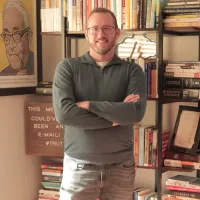
I've been a pastor for over 25 years and an investing coach for more than 15. My mission is to help leaders like you build financial resilience so you can focus on your calling.
"I don’t believe in get-rich-quick schemes. This course teaches the same steady approach I’ve used for years to help leaders grow their savings without stress."
This is the system you’ll learn in the Bootcamp. I've been trading it personally for years and have teaching it to leaders like you since 2018.

Average 2–3% ROI per month for the past 7 years

Turned $1,000 into $5,000 in 2 years using this exact system

Repeatable trades built on seasonal patterns with a high win rate
Here’s what other leaders who started right where you are Have to Say about their experience with Stocks for Pastors.

“I never thought investing was something I could do, but this gave me confidence, clarity, and a clear path forward.”
Joel S.
“My account has nearly doubled in 18 months since I started with Stocks for Pastors.”
Eric B.
“Michael’s course has helped me see a clear path to advance my family financially. It is doable and attainable- exactly like he said it would be."
Dave C.
Everything You Need, Right Here
This Bootcamp is not a teaser or a sales pitch. It’s a complete, beginner-friendly system you can use to start investing with confidence. You don’t need to buy anything else to make this work.
In just a few short trainings, you’ll know how to open your account, spot seasonal opportunities, and place your first trade with a proven process.
No fluff. No missing pieces. Just a clear path you can follow starting today.


© 2025 G6 Allies - All Rights Reserved


Read Our Latest Blogs
Lorem ipsum dolor sit amet, consectetur adipiscing elit.

Big Prayers, Small Faith
What Makes a Prayer Earnest?
Praying is something most of us do all day long. Silently, out loud, over meals, at bedtime. Sometimes we murmur prayers without even realizing we're praying them. But prayers offered with faith, that's a different subject altogether.
What makes a prayer earnest? Does earnestness require faith, or can we bring a desperate, honest prayer to God while faith is largely left out?
Acts 12 is one of the clearest pictures of earnest prayers offered up with small faith, and it is one of my favorite stories in all of Scripture.
Peter's Impossible Situation in Acts 12
At the start of the chapter, James has just been killed by Herod, and Herod is about to take Peter's life as well. The church has gathered at Mary's home, begging God to save him. It is an impossible ask. Peter had already escaped Herod's clutches once just seven chapters earlier, and Herod is not about to let that happen again. He's backed into a political corner. James' death has made him popular with the Jews and Peter's earlier escape has embarrassed him. He needs this win.
So, he goes to extraordinary measures. Luke tells us Peter is guarded by four squads of soldiers, the Greek word tetradion meaning four, giving us sixteen Roman soldiers in total. They rotate in sets of eight: one squad patrolling the outer watch, two guards chained to Peter on either side, two more stationed at the entrance. The night before his execution, Peter is sleeping in that chain, flanked on both sides, with no realistic hope of escape.
The Church Praying at Mary's House
The church praying at Mary's house knows all of this. They are not naive about the odds. They have just buried James. Their faith is small and their grief is fresh. And still, they are there. Still praying. How could God overcome what Rome has set in motion? And why would he, when he hadn't intervened for James?
But God hears. And God acts in a way no one in that room would have thought to imagine.
God Sends an Angel Anyway
Because it is not yet time for Peter's ministry to end, God sends an angel to simply walk him out. Peter is sleeping so soundly the angel has to jab him in the side to wake him. Even then, Peter assumes he's seeing a vision. He does not believe the events he's watching are real. Yet God tends to every obstacle, and there were many, until Peter is standing alone in the street. Only then does it dawn on him: this actually happened.
Rhoda at the Gate — When Answered Prayer Feels Unbelievable
He goes immediately to Mary's house, where the church is still gathered, still praying. He knocks at the outer gate.
A servant girl named Rhoda comes to answer.
She recognizes Peter's voice, and in her excitement, forgets to open the gate. She turns and runs back inside to tell the others, leaving the man they've been praying for standing alone in the street.
This is one of my favorite moments in all of Scripture. Because what happens next is so profoundly, painfully human: not a single person inside believes her. They've been up all night begging God to save Peter's life, and when Rhoda insists he's at the door, they tell her she's out of her mind. When she keeps pushing, they land on an alternative explanation; it must be his ghost. The ghost of Peter strikes them as more plausible than the possibility that God did the very thing they asked him to do.
Why We Pre-Reject Our Own Prayers
And this is precisely where we find ourselves today.
We expect God to be distant and slow to act in the things we bring to him. Often, we choose not to ask at all, because we're afraid our faith is too small, too shaky, too full of doubt to be worth God's time. We pre-reject our own prayers.
God Hears Prayers Soaked in Doubt
But here is what Acts 12 quietly insists: our God hears the prayers of his children even when those prayers are soaked in doubt. The church praying at Mary's house was desperate and grieving and apparently not expecting much — and God busted Peter out of a Roman prison anyway. The prayers of the righteous avail much, even when those prayers are offered with very little faith.
What is man, that you are mindful of him?
Blessed, is what we are. Held by a God who does not require polished faith before he acts. Who hears us anyway, who moves anyway, who meets us at the door while we're still inside arguing about whether it's possible.
