
Start Investing with Confidence, Even If You’re Brand New
This free bootcamp is your first step toward confident investing. In just a few short lessons, you’ll learn a simple system you can actually use.


Most church leaders feel overwhelmed by money and unsure where to even start.

This bootcamp gives beginners a safe, step-by-step way to invest without jargon or complexity.

Imagine the peace of finally knowing how to grow your savings with confidence and consistency.

What You’ll Learn
How stocks actually work and why you don’t need Wall Street experience to invest.
How to open your first brokerage account with step-by-step instructions.
What seasonal investing is and why it gives beginners a unique edge.
A simple trading system that helps you decide when to buy and sell.
First steps for new investors so you can start with confidence, not confusion.
Why Seasonal Investing Works
Seasonal investing is built on predictable, recurring patterns in the market. Think of it like planting in the right season: some months are better for certain stocks than others. By learning these patterns, you can make informed trades that reduce guesswork and increase confidence.
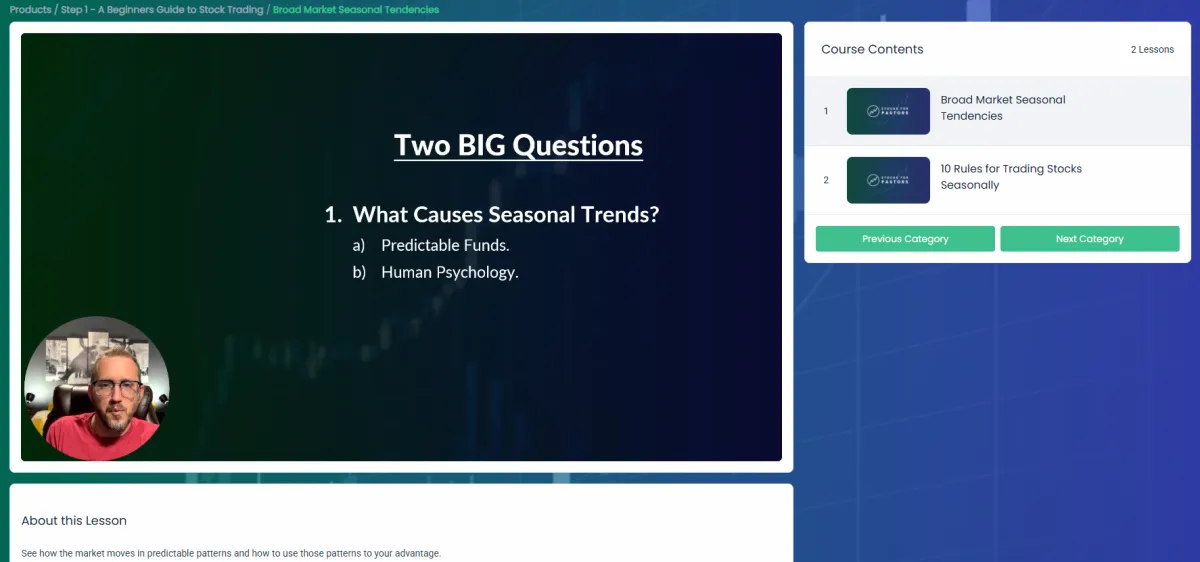
This training walks you through the process step by step, so you can take advantage of these patterns without spending hours in front of charts.
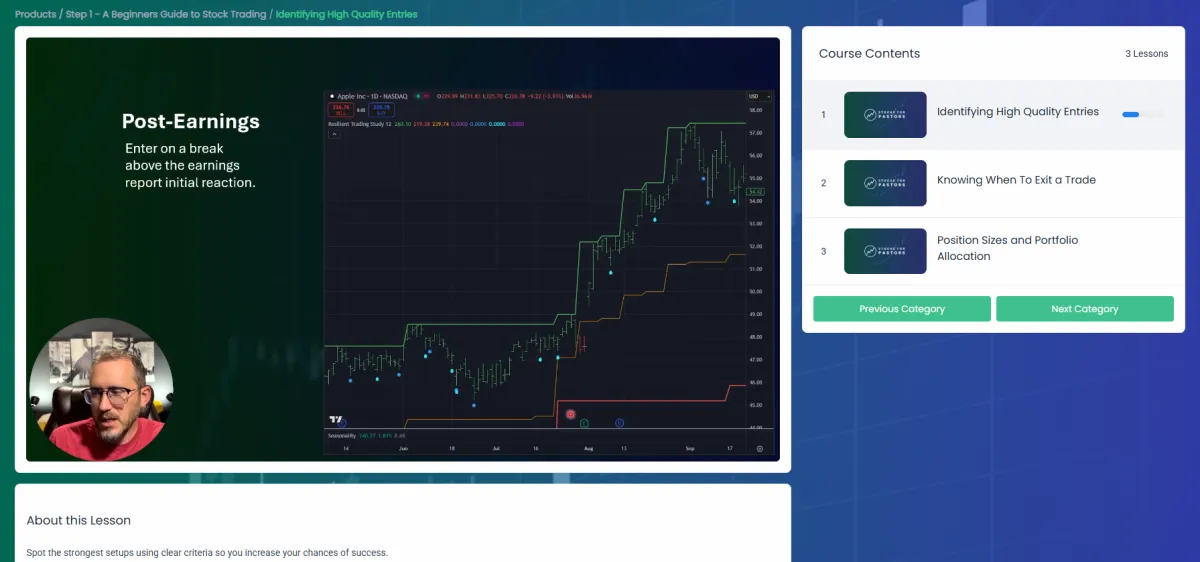
This Bootcamp was built for busy leaders who don’t want another endless online course. It’s short, focused, and designed to get you moving right away.
Who This Is For?
The First-Time Investor
You’ve never bought a stock in your life, and you want someone to walk you through the basics without making you feel dumb.The Frustrated Dabbler
You’ve bought stocks here and there, maybe even followed tips or trends, but you’ve never seen consistent results. You’re ready for a proven system that actually works over time.The Overwhelmed Saver
You’ve tried saving, but it feels slow and discouraging. You want a way to actually grow your money instead of watching it sit there.The Busy Leader
You don’t have hours each week to watch charts or read financial reports. You need a simple plan that fits into your real schedule.

I've been a pastor for over 25 years and an investing coach for more than 15. My mission is to help leaders like you build financial resilience so you can focus on your calling.
"I don’t believe in get-rich-quick schemes. This course teaches the same steady approach I’ve used for years to help leaders grow their savings without stress."
This is the system you’ll learn in the Bootcamp. I've been trading it personally for years and have teaching it to leaders like you since 2018.

Average 2–3% ROI per month for the past 7 years

Turned $1,000 into $5,000 in 2 years using this exact system

Repeatable trades built on seasonal patterns with a high win rate
Here’s what other leaders who started right where you are Have to Say about their experience with Stocks for Pastors.

“I never thought investing was something I could do, but this gave me confidence, clarity, and a clear path forward.”
Joel S.
“My account has nearly doubled in 18 months since I started with Stocks for Pastors.”
Eric B.
“Michael’s course has helped me see a clear path to advance my family financially. It is doable and attainable- exactly like he said it would be."
Dave C.
Everything You Need, Right Here
This Bootcamp is not a teaser or a sales pitch. It’s a complete, beginner-friendly system you can use to start investing with confidence. You don’t need to buy anything else to make this work.
In just a few short trainings, you’ll know how to open your account, spot seasonal opportunities, and place your first trade with a proven process.
No fluff. No missing pieces. Just a clear path you can follow starting today.


© 2025 G6 Allies - All Rights Reserved


Read Our Latest Blogs
Lorem ipsum dolor sit amet, consectetur adipiscing elit.
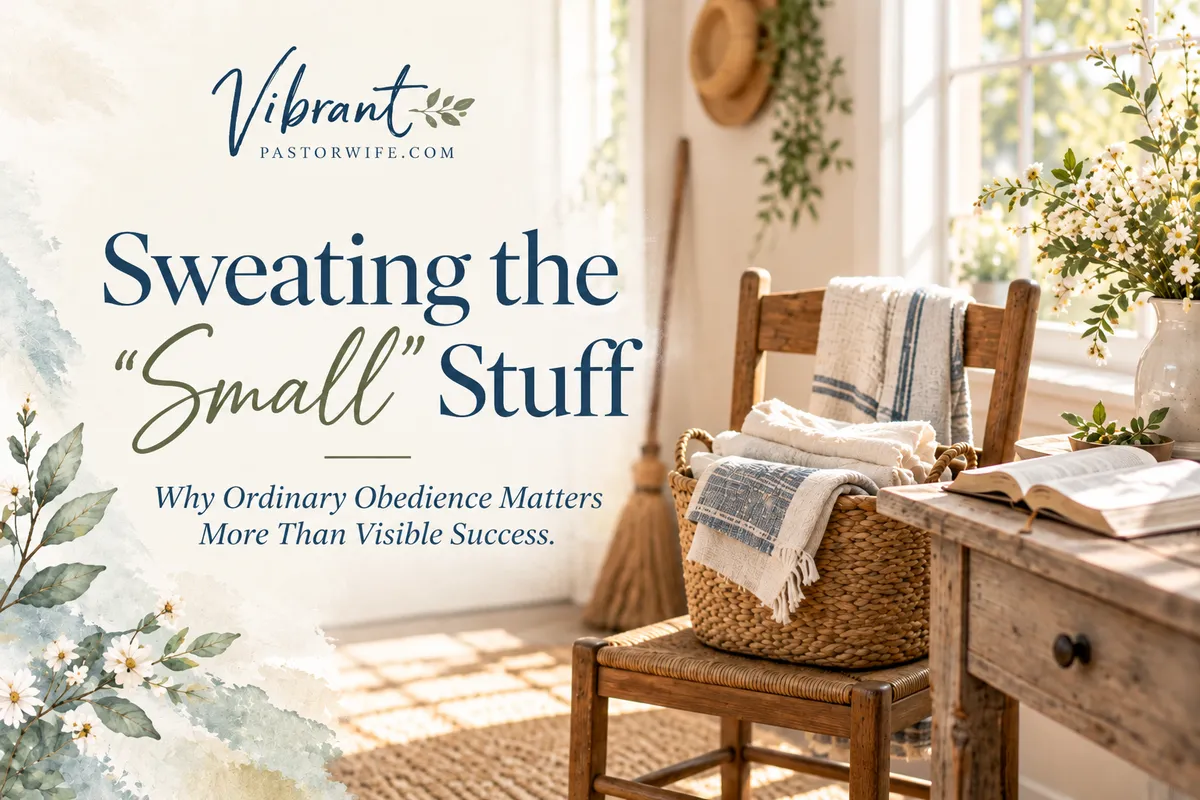
Sweating the Small Stuff: Ordinary Faithfulness
Sweating the “Small” Stuff
Why Ordinary Obedience Matters More Than Visible Success
When you hear the word faithfulness, what do you picture?
Maybe you envision a missionary serving overseas, a woman teaching God’s Word to a room full of people, or a ministry leader with years of fruitful service behind her. We tend to associate faithfulness with things we can see—significant accomplishments, visible influence, and lives that seem to be making an obvious difference for the kingdom of God.
But what if the faithfulness God values most will never be noticed by other people?
Paul gives us a different way of viewing our ordinary work in Colossians:
“Whatever you do, work heartily, as for the Lord and not for men, knowing that from the Lord you will receive the inheritance as your reward. You are serving the Lord Christ.” (Colossians 3:23–24, ESV)
When it comes to living for the Lord, this passage packs a serious punch. Paul isn’t speaking primarily about preaching sermons, leading ministries, or accomplishing something extraordinary. His instruction comes in the middle of discussing the work of ordinary household responsibilities. In fact, he originally addresses these words to bondservants—people whose daily work would hardly have been considered impressive or important by the culture around them.
Yet Paul tells them their work has an entirely different significance because of whom they are ultimately serving: You are serving the Lord Christ.
The Audience Changes the Work
Most of us naturally evaluate our work by its results. Was it successful? Did anyone notice? Did it make a difference? Those questions aren’t always wrong, but they can easily become the way we determine whether something mattered. Paul gives us another measure: whatever you do, do it for the Lord.
Suddenly, the significance of our work isn’t determined by its visibility, but rather by the One for whom it is done. Faithfulness may look like preparing diligently to teach God’s Word to five women instead of five hundred. It may look like changing another diaper with patience, making dinner after a long day, or praying for someone who will never know you prayed.
Scripture repeatedly connects faithfulness with stewardship. Paul writes, “Moreover, it is required of stewards that they be found faithful” (1 Corinthians 4:2, ESV). A steward doesn’t own what has been placed in his care. He has been entrusted with something that belongs to another.
Our lives, gifts, relationships, opportunities, and resources ultimately belong to God. Faithfulness isn’t using them to create a life that impresses others. It’s stewarding them according to the purposes of the One to whom they belong.
When Faithfulness Starts Looking Like Someone Else
Comparison has a way of making ordinary obedience feel insignificant. We see someone else’s gifts, ministry, or capacity and begin measuring our stewardship against hers. Stewardship, however, requires us to pay attention to what the Master has actually placed in our hands.
Jesus illustrates this in Matthew 25. In the parable of the talents, a master entrusts his property to his servants before leaving to go on a journey. When he returns, the servants give an account for what they did with what belonged to him. To the faithful servants, the master says:
“Well done, good and faithful servant.” (Matthew 25:21, ESV)
The parable points us to the reality that Christ will return and His servants will give an account for how we have lived while awaiting Him. We aren’t faithfully using what God has given us merely to build satisfying or impressive lives. We are stewarding what belongs to our Master while we wait for His return. Faithfulness isn’t about making our lives look impressive beside someone else’s. It is about faithfully caring for what the Master has placed in our hands.
The Holiness of Ordinary Things
Recognizing the purpose of stewardship changes the way we see ordinary life. The world naturally celebrates visibility. It notices platforms, numbers, audiences, influence, and results. Scripture repeatedly draws our attention somewhere quieter—to serving, giving, praying, loving, repenting, and obeying…even when no one else sees.
Jesus makes this especially clear in Matthew 6. As He warns His disciples against practicing righteousness in order to be seen by others, He repeatedly directs their attention to their Father “who sees in secret” (Matthew 6:4, 6, 18).
God sees what other people miss. He sees the prayer whispered beside a crib in the middle of the night. He sees the choice to respond gently when irritation would have been easier. He sees the apology offered and the temptation resisted.
Ordinary obedience matters because it is offered to an extraordinary God, and obedience that receives no applause often reveals something important about whom we’re actually serving. The Christian life, however, isn’t an invitation to replace one performance system with another. We aren’t trading the pressure to impress people for the pressure to accumulate enough quiet acts of obedience to impress God.
Our obedience doesn’t earn His love. It flows from it.
Our Faithfulness Begins With Christ’s Faithfulness
None of us has perfectly stewarded what God has given us. We’ve neglected responsibilities, sought applause, compared ourselves to others, and sometimes pursued worldly things while ignoring the opportunities for ordinary obedience directly in front of us. If our standing before God depended upon our record of faithfulness, even our best efforts would leave us without hope.
Fortunately for us, the gospel doesn’t begin with our faithfulness. It begins with Christ’s. Jesus perfectly obeyed the Father in every place we have failed. He never needed applause to remain obedient. Not once did he abandon the Father’s will in pursuit of something the world around him would find more impressive. He faithfully completed the work He had been given to do, even when obedience led Him to the cross. There He bore the judgment our unfaithfulness deserved, accomplishing what our own faithfulness never could.
Because of Christ, we don’t pursue faithfulness hoping that someday God will finally accept us. In him, we have already been brought near. We are forgiven and made His own.
Obedience becomes our response to grace rather than our attempt to earn it.
What Has God Put in Your Hands?
Sometimes we become so preoccupied with doing something significant for God that we overlook what He has already given us to do. Faithfulness doesn’t begin with finding something bigger. It begins by looking at what is already in our hands.
Who has God given you to love? What has He entrusted to your care?
The answers may not feel impressive. Faithfulness may mean loving your family well after a long day. It may mean showing up to a job no one considers glamorous, serving without recognition, or discipling one woman over coffee—but small doesn’t mean insignificant. We don’t need someone else’s assignment in order to live faithfully before Christ. We need to steward what He has actually placed in our hands, trusting that He—not the world around us—determines its significance. One day, platforms will disappear, accomplishments will be forgotten, and applause will fall silent. But obedience offered to Christ will not have been wasted.
So perhaps the question isn’t, Am I doing something important enough for God?
Perhaps the better question is, Am I being faithful with what He has put in my hands today?
You may just discover that faithfulness is much smaller than you imagined—and far more significant than you realized. In the moments when our work feels unimportant, we must remember that God sees what others may never notice. The goal isn’t to gain the favor or applause of other people. It’s simply to honor God with our submission and integrity. We bring glory to the Lord when our hearts are focused on serving with excellence in whatever we do, no matter how big or small the task.
