
Start Investing with Confidence, Even If You’re Brand New
This free bootcamp is your first step toward confident investing. In just a few short lessons, you’ll learn a simple system you can actually use.


Most church leaders feel overwhelmed by money and unsure where to even start.
This bootcamp gives beginners a safe, step-by-step way to invest without jargon or complexity.

Imagine the peace of finally knowing how to grow your savings with confidence and consistency.

What You’ll Learn
How stocks actually work and why you don’t need Wall Street experience to invest.
How to open your first brokerage account with step-by-step instructions.
What seasonal investing is and why it gives beginners a unique edge.
A simple trading system that helps you decide when to buy and sell.
First steps for new investors so you can start with confidence, not confusion.
Why Seasonal Investing Works
Seasonal investing is built on predictable, recurring patterns in the market. Think of it like planting in the right season: some months are better for certain stocks than others. By learning these patterns, you can make informed trades that reduce guesswork and increase confidence.
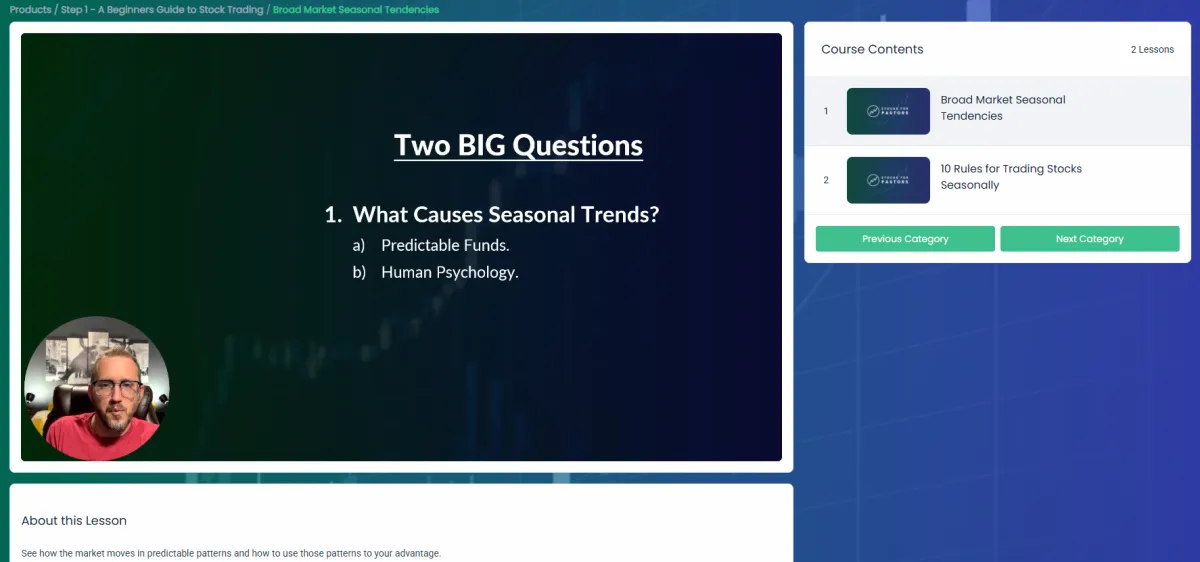
This training walks you through the process step by step, so you can take advantage of these patterns without spending hours in front of charts.
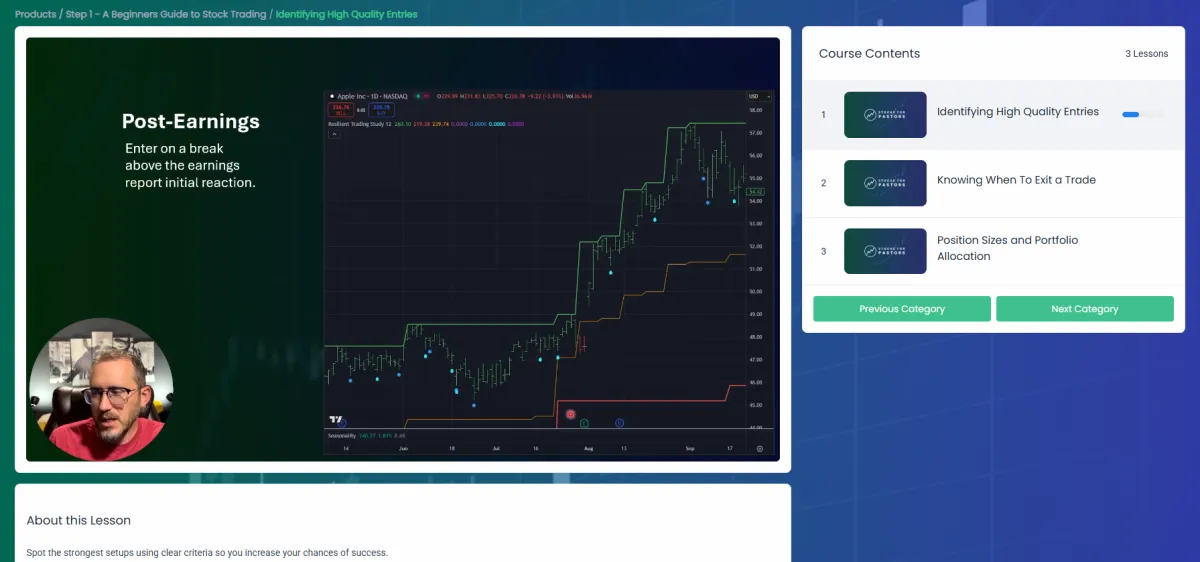
This Bootcamp was built for busy leaders who don’t want another endless online course. It’s short, focused, and designed to get you moving right away.
Who This Is For?
The First-Time Investor
You’ve never bought a stock in your life, and you want someone to walk you through the basics without making you feel dumb.The Frustrated Dabbler
You’ve bought stocks here and there, maybe even followed tips or trends, but you’ve never seen consistent results. You’re ready for a proven system that actually works over time.The Overwhelmed Saver
You’ve tried saving, but it feels slow and discouraging. You want a way to actually grow your money instead of watching it sit there.The Busy Leader
You don’t have hours each week to watch charts or read financial reports. You need a simple plan that fits into your real schedule.
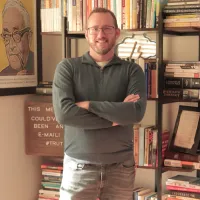
I've been a pastor for over 25 years and an investing coach for more than 15. My mission is to help leaders like you build financial resilience so you can focus on your calling.
"I don’t believe in get-rich-quick schemes. This course teaches the same steady approach I’ve used for years to help leaders grow their savings without stress."
This is the system you’ll learn in the Bootcamp. I've been trading it personally for years and have teaching it to leaders like you since 2018.

Average 2–3% ROI per month for the past 7 years

Turned $1,000 into $5,000 in 2 years using this exact system

Repeatable trades built on seasonal patterns with a high win rate
Here’s what other leaders who started right where you are Have to Say about their experience with Stocks for Pastors.

“I never thought investing was something I could do, but this gave me confidence, clarity, and a clear path forward.”
Joel S.
“My account has nearly doubled in 18 months since I started with Stocks for Pastors.”
Eric B.
“Michael’s course has helped me see a clear path to advance my family financially. It is doable and attainable- exactly like he said it would be."
Dave C.
Everything You Need, Right Here
This Bootcamp is not a teaser or a sales pitch. It’s a complete, beginner-friendly system you can use to start investing with confidence. You don’t need to buy anything else to make this work.
In just a few short trainings, you’ll know how to open your account, spot seasonal opportunities, and place your first trade with a proven process.
No fluff. No missing pieces. Just a clear path you can follow starting today.


© 2025 G6 Allies - All Rights Reserved


Read Our Latest Blogs
Lorem ipsum dolor sit amet, consectetur adipiscing elit.
Rest Is an Act of Trust: What Psalm 127 Says
Rest Is an Act of Trust
Our inability to stop may reveal what we really believe about God.
There is always something else to do. Another load of laundry. Another email to answer. Another lesson to prepare. Another person who needs something. We rise each morning with a to-do list already scrolling, and we lay down recounting what must be revisited tomorrow.
For some of us, rest doesn’t feel restful at all. It feels irresponsible. Because somewhere beneath all that activity may be a quiet fear: What will happen if I stop?
Psalm 127 speaks directly to that fear:
“Unless the LORD builds the house, those who build it labor in vain. Unless the LORD watches over the city, the watchman stays awake in vain. It is in vain that you rise up early and go late to rest, eating the bread of anxious toil; for he gives to his beloved sleep.” (Psalm 127:1–2, ESV)
Notice that the psalm doesn’t condemn work. There are builders building and watchmen watching. Their labor is real, and it matters, but their labor is not ultimate.
Unless the Lord builds, the builders labor in vain. Unless the Lord watches, the watchman’s vigilance cannot secure the city. The problem isn’t work itself. The problem is working as though everything ultimately depends upon us.
Work Was God’s Idea
Scripture never presents work itself as the enemy. Before sin entered the world, “the LORD God took the man and put him in the garden of Eden to work it and keep it” (Genesis 2:15, ESV). Work was part of God’s good creation. The curse didn’t create work. It introduced toil.
After Adam’s rebellion, the ground itself was cursed. It began producing thorns and thistles, and Adam had to eat from it “by the sweat of [his] face” (Genesis 3:19, ESV). The good work God had given humanity became marked by frustration, difficulty, and exhaustion.
We still experience that tension. Work is good, but work is hard. Even good service can become tangled with anxiety and striving. Psalm 127 doesn’t tell us to stop building or watching. It reminds us that neither builder nor watchman is sovereign. We work faithfully, but ultimately we depend upon God.
What Happens When We Stop?
Psalm 127 describes people rising early, staying up late, and eating “the bread of anxious toil.” That phrase probably resonates with most of us. We can work long after wisdom tells us to stop just because something remains unfinished. We can carry responsibilities God never actually gave us because we’re afraid of what might happen if we put them down. We can even begin treating exhaustion as evidence of faithfulness.
Sometimes our inability to rest reveals more than a busy schedule. It reveals what we believe about control. Our overwhelming need to martyr ourselves on the altar of productivity reveals hearts that struggle to trust that God is truly sovereign and has good plans for us.
We allow our doubts to determine our schedules as our minds bury the questions driving our fixation on striving: If I stop, will everything fall apart? Will someone be disappointed? Will something important be left undone? What will people think?
Rest confronts those questions because eventually we have to stop building. We have to stop watching. We have to leave something unfinished…and when we do, we are confronted with a truth that busyness can help us forget: we are not God.
The God Who Doesn’t Need to Sleep
Psalm 121 says of the Lord:
“Behold, he who keeps Israel will neither slumber nor sleep.” (Psalm 121:4, ESV)
We sleep because we are creatures. God does not because He is God, the Creator.
Every night, sleep requires us to relinquish control. We stop working, watching, and solving problems. And God remains awake. The God who keeps His people does not clock out when we do. His providence isn’t dependent upon our vigilance, and His purposes aren’t sustained by our productivity. Rest is, therefore, an act of trust. When we stop and entrust unfinished work to God, we acknowledge that His faithfulness—not our constant activity—is what ultimately sustains us.
We don’t rest because everything is finished. We rest because God is faithful.
Jesus Invited His Disciples to Rest
In Mark 6, the disciples returned from ministry and told Jesus everything they had done and taught. But so many people were coming and going that Mark tells us “they had no leisure even to eat” (Mark 6:31, ESV).
Jesus responded, “Come away by yourselves to a desolate place and rest a while.” (Mark 6:31, ESV)
But…the crowd followed them.
Their planned retreat was interrupted. Jesus had compassion on the crowd and began teaching them, eventually feeding the five thousand. This record keeps us from turning His invitation into a promise of uninterrupted rest. Sometimes love interrupts our plans. Sometimes genuine needs require sacrifice. Still, Jesus recognized His disciples’ need to pause and recuperate. Their limitations were not spiritual failures. They were creatures, and creatures need food, sleep, solitude, and restoration. Faithfulness doesn’t require us to pretend otherwise.
Resting Before the Work Is Done
Most of us would happily rest if everything were finished. But that day rarely comes. There will almost always be something else we could do. Psalm 127 reminds us that all our labor remains dependent upon the Lord. We build, but God must establish the work. We watch, but God is ultimately the One who keeps us. Rest means trusting Him enough to stop before everything is finished.
That doesn’t make laziness a virtue or excuse neglecting our responsibilities. Scripture commends diligent work, but diligence and anxious striving are not the same thing. Diligence receives work as stewardship; anxious striving quietly begins acting as though everything depends upon us.
The Work We Could Never Finish
That temptation toward self-reliance reaches far beyond our schedules. Nowhere is its failure clearer than in our standing before God.
No amount of work could make us righteous. No amount of service could erase our sin. No amount of ministry, productivity, or sacrifice could reconcile us to God, so God accomplished for us what we could never accomplish for ourselves. Jesus lived the righteous life we could not live and went to the cross bearing the judgment our sin deserved. Through His death and resurrection, the work necessary for our reconciliation to God was accomplished—by Christ, not by us.
Our deepest security has never depended upon our ability to hold everything together. It depends upon Him. That gospel reality changes the way we approach our work. We are free to labor diligently because our work isn’t carrying the weight of our identity. We are free to stop because neither our standing with God nor His sovereign purposes depend upon our constant effort.
God Is Still God While You Sleep
The unfinished work in front of you may genuinely matter. The people matter. The responsibilities matter. The ministry matters. All of it matters, but none of it requires you to become limitless.
There comes a point when faithfulness looks like closing the laptop, turning off the light, leaving something for tomorrow, and trusting God with what remains undone. Rest isn’t a declaration that the work doesn’t matter. It’s an acknowledgment that we are creatures and God is not. We don’t rest because everything is finished. We rest because God is faithful.
Tomorrow there will be more work to do. Tonight, you can rest. The God who keeps you is still awake.
