
Go beyond the basics with advanced strategies, hands-on coaching, and the ongoing support you need to trade like a pro.
Multiply Your Trading Skills and Grow Your Monthly Income Faster

You Don’t Need Another Job. You Need a Paycheck That Works on Your Terms.
You’ve probably heard it before:
“Start a side hustle.”
“Pick up some extra speaking gigs.”
“Drive for Uber in your free time.”
But deep down, you know the truth: Your time is already maxed out.
What you need is margin. Not more hustle.
What If You Could Run a Simple, Part-Time Trading Business From Your Laptop?
The Stocks for Pastors program is a complete system designed to help faith-based entrepreneurs create withdrawable income every month using options trading.
It’s not a hobby. It’s not guesswork.
It’s a repeatable process to build a lean, flexible business that pays like a second job, without pulling you away from your first calling.

You’ll know exactly what to do, when to do it, and how to manage it.
How It Works
This isn’t “set it and forget it” investing. This is business building, with tools, structure, and strategy.
Two Core Strategies: The Cash Flow Collective and The Double Canopy Strategy.
Weekly Trade Alerts: Follow along with exact setups for every strategy. Copy the trades of a professional in your own account with the click of a button.
Monthly Group Coaching: Live calls to review trades, sharpen your skills, and get your questions answered in real time.
Priority Email Support: Direct answers when you need them so you’re never trading alone.
What's Included
When you join the private community, you get full access to:
The Options Business Course:
Learn the full framework behind this income-generating model. Taught in clear, practical lessons.
Full Courses for Both Trading Strategies:
Master the complete playbook, from beginner-friendly methods to advanced setups, so you can adapt to any market condition.
Real-Time Trade Alerts:
Follow Michael’s actual trades each week. Know what to trade, when, and why.
Monthly Group Coaching Calls:
Get feedback, troubleshoot your trades, and grow with a like-minded community.
Unlimited Email Support:
Run your trading like a system, not a guessing game.
Supportive Private Group:
Be part of a network of pastors and ministry leaders building the same kind of freedom you are.
Additional Strategy Vault:
Learn bonus strategies for advanced traders who want to expand their trading arsenal.
Real Results. Real Income.
This isn’t theory. These are actual results.
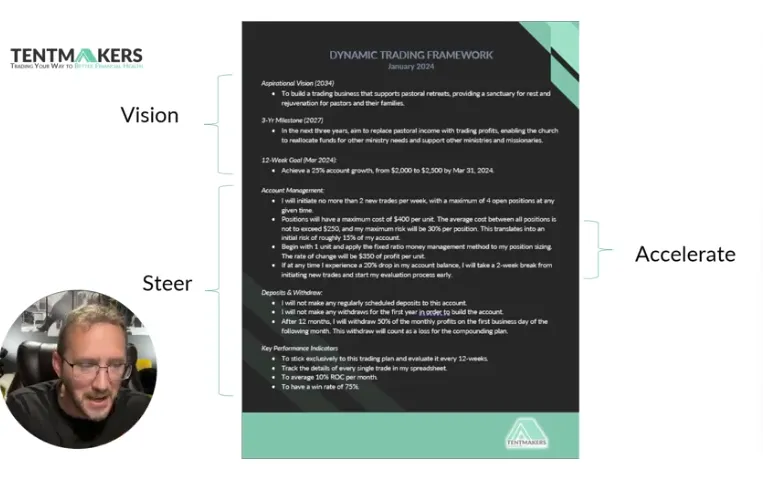
Since launching the SFP Community in January 2021, Michael has placed hundreds of trades with a better than 70% win rate, using the same strategies shared in this program.
Average Monthly ROI: 5.9%!
Average Monthly Income: $477!
Only 2 Losing Months: 91.7% winning months!
That’s not flashy day trading. That’s consistent, repeatable income—built with focus, discipline, and a strategy that works.
If a $2,000 account can generate nearly $12K in profit in two years, imagine what this could mean for your family, your ministry, or your financial peace of mind.

While results are never guaranteed and losses are always possible, many members report profit potential in the $300–$400/month range within six months as they gain confidence and consistency.
PRICING
Choose Your Membership
Monthly
$197/mo
Beginner-friendly video course that walks you through every step
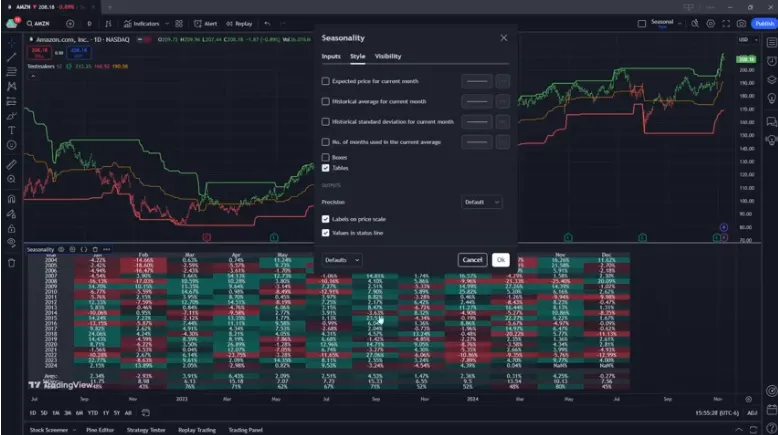
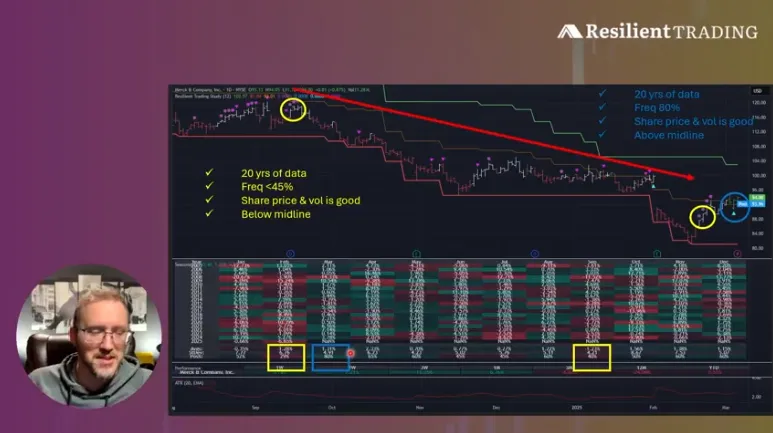
Monthly seasonal watchlist of high-probability stocks
Full courses for CFC and DCS strategies
Real-time alerts each week
Copy trading to save time
Access to member community
Monthly live group coaching call
7-Day Free Trial
Cancel Anytime

No contracts - cancel anytime
Semi-Annually
$997/6mos
Beginner-friendly video course that walks you through every step
Monthly seasonal watchlist of high-probability stocks
Full courses for CFC and DCS strategies
Real-time alerts each week
Copy trading to save time
Access to member community
Monthly live group coaching call
Get 1 month free
Bonus 1:1 onboarding video chat
No contracts - cancel anytime
Annually
$1,970/yr
Beginner-friendly video course that walks you through every step
Monthly seasonal watchlist of high-probability stocks
Full courses for CFC and DCS strategies
Real-time alerts each week
Copy trading to save time
Access to member community
Monthly live group coaching call
Get 2 months free
Bonus 1:1 onboarding video chat
No contracts - cancel anytime
For Christian Leaders Who Think Like Entrepreneurs

Wants to provide more for your family without overextending your time
Believes financial margin creates ministry freedom
Is ready to treat income generation with the same intentionality as discipleship
Doesn’t want hype, just a method that works
Is willing to learn, apply, and grow
You're not just looking to invest.
You're looking to build something that gives back.
What Members are saying

“I can't tell you how awesome it felt to close my first winning trade! Knowing that when I clicked that button, I would be able to use that profit for a much needed date night with my wife. Thank you!”
Jon. H.
“I've been doing pretty good with stocks, but learning how to trade options has taken things to a whole new level.”
Ben C.
“This has been exactly the kind of side-hustle I was looking for. I needed someone I could trust to teach me how to get more time back and stop doing side gigs that take hours of my time and eat away at my ministry focus. Plus, I make more money with this. A double win!"
Will D.
Imagine This...
What if you could earn an extra 5–10% every month from your trading account?
Not once in a while. Not someday. But consistently. Month after month. What would you do with that extra income? How would it change the way you care for your family? What would it free you from mentally, emotionally, even spiritually?
Maybe you'd finally take your spouse on that getaway.
Maybe you'd cover an unexpected bill without fear.
Maybe you'd support a missionary or fund a ministry dream that’s been on your heart for years.
Maybe you'd stop feeling like you're behind.
This isn’t about chasing riches. It’s about creating margin so you can serve God and others with peace and confidence.
Let’s build that future together!
Read Our Latest Blogs
Lorem ipsum dolor sit amet, consectetur adipiscing elit.

What the Bible Actually Says About Parenting a Pastor's Kid: Eli, Samuel, and the Truth About PKs
Has it ever felt like your ministry was hanging by a thread because your three-year-old missed nap time, or your middle schooler backtalked you in the church hallway?
We all live under weight specific to our callings. One particular cloud that hangs over pastors' families is one you've probably heard quoted "at you," or felt hovering behind a judgmental eye while your child has a meltdown in the foyer:
1 Timothy 3:4-5: the pastor must "manage his own household well... for if someone does not know how to manage his own household, how will he care for God's church?" Titus ups the ante, requiring elders to have children who are "faithful" and not open to a charge of debauchery or insubordination.
These verses deserve a hard look, because if we don't know what God is asking of us, our families may be pummeled by weaponized passages that don't reflect the heart of God’s calling. The goal is never to explain Scripture away, it’s to understand it as God intended. If we don’t, we miss the benefit scripture offers entirely.
Eli and Samuel: A Tale of Two Fathers in 1 Samuel
Start in 1 Samuel, where the Bible hands us a matched pair of case studies we'd be foolish to skip.
Eli goes first. His sons went down in history as scoundrels who abused their access to the priesthood, and when Eli found out, he offered them a gentle scolding and little else. Both were grown men but still functioning under Eli's roof and authority as priests. God is not kind to Eli, not simply because his sons were corrupt, but because Eli knew, and chose his sons' comfort over God's word (1 Samuel 2:12- 3:13).
Sitting directly parallel to Eli is Samuel, one of the most faithful men in the entire Old Testament. And still, his sons were evil. Scripture says they "did not walk in his ways." They "turned aside after gain, took bribes and perverted justice” (1 Samuel 8:1-3).
Here's the difference: Eli is rebuked by God for knowing and refusing to act. Samuel gets no rebuke at all. The narrator simply reports the fact and moves on. Two men, two sets of wicked sons, two entirely different verdicts. Eli is guilty of ongoing negligence toward sin in his own home. Samuel is guilty of nothing, he simply carries the heartbreak of sons who, as adults, choose badly.
That distinction tells us what "managing your household well" actually means.
What "Manage Your Household Well" Actually Means
The Greek word behind “manage” in 1 Timothy 3:4 is proistēmi: to lead, to preside over, to competently oversee. It's the same word Paul uses in 5:17 for elders who "rule well." It describes active, present diligence. It is not a word that reaches into the adult lives of grown children, and it does not promise control over another human soul. This is a present-tense competency test, not a lifelong scorecard.
Faithful Homes Can Still Produce Wandering Adult Children
Samuel shows us that even in the most spiritually faithful homes, adult children can walk away from the faith they were raised in. This is something that is between the adult child and the Lord. It is not an indictment of the parent.
Correction Now Matters More Than Perfection Later
Eli shows us something just as important, from the other side: his sons weren't judged for making mistakes. Scripture always makes room for the fact that children are imperfect and need to be guided in the way they should go. Eli didn't lose his household because his sons sinned, he lost it because he knew and did nothing. "I have told him that I will judge his house forever, for the iniquity that he knew, because his sons were blaspheming God, and he did not restrain them" (3:13).
Children are going to make mistakes growing up, whether they're PKs or not. They aren't meant to live under a microscope or in a fishbowl. What Scripture actually asks for is correction in the moment, while they're still under their parents' authority. Pastors are called to actively shape and correct their homes , because if they can't do that, how can they lead a church?
No Guarantees Over Anyone's Soul, Including a Pastor's Own Kids
Being a pastor's kid has never been a promise of a Christian adulthood. Even the most faithful parents have children who walk away, and there's a longer conversation to be had about how churches can help guard against that for the PKs in their fellowship, but the plain reality is that there are no guarantees over the souls of anyone in a pastor's family, including the pastor's own children.
Ezekiel 18: Why Children Aren't Judged for Their Parents' Sins
A clear statement of this principle in Scripture is found in Ezekiel 18. The exiles were leaning on an old proverb to dodge responsibility for their own choices by blaming the generation before them: "The fathers eat sour grapes, and the children's teeth are set on edge." God shuts that down immediately: "This proverb shall no more be used in Israel" (18:3). Then he lays out the standard plainly: "The soul who sins shall die... The righteousness of the righteous shall be upon himself, and the wickedness of the wicked shall be upon himself. The son shall not suffer for the iniquity of the father, nor the father suffer for the iniquity of the son" (18:20).
This wasn't new. Deuteronomy 24:16 had already put it into law, and 2 Kings 14:6 shows a king honoring that statute in practice.
God does not run a ledger that transfers a wandering child's record onto a faithful parent's account. Nor does he hand pastors children stripped of free will as some kind of reward for the office. Kids are kids and must be corrected regardless of their parent's vocation. Adults stand before God independently of their parents for the choices they make after they leave the authority of their childhood home. But parents will answer for the leadership of their home while their children are still under that authority.
Faithfulness, Not Perfection: Even Jesus's Family Struggled
No home is perfect, not even the one that raised the only perfect human to walk the earth. Jesus had family members who didn't believe in him during his ministry (John 7:5), and some who thought he'd lost his mind entirely (Mark 3:21). God calls us to faithfulness, not perfection. The children given to a pastor's home are not a measuring stick for their father, they're a gift to be guided through adolescence in the way of the Lord.
A Word to Parents of PKs: Don't Be Eli
To those of you who parent the gift of ministry children: don't be Eli. Don't watch sin go unchecked in your own home during the years you have been given the authority to speak into their behavior. Don't trade the harder work of correction for your own comfort, or your child's. Those years are all you have. Once that child walks out your door and into a life of their own, they no longer belong to you, they belong to God, on their own terms.



© 2025 G6 Allies - All Rights Reserved


