
Go beyond the basics with advanced strategies, hands-on coaching, and the ongoing support you need to trade like a pro.
Multiply Your Trading Skills and Grow Your Monthly Income Faster

You Don’t Need Another Job. You Need a Paycheck That Works on Your Terms.
You’ve probably heard it before:
“Start a side hustle.”
“Pick up some extra speaking gigs.”
“Drive for Uber in your free time.”
But deep down, you know the truth: Your time is already maxed out.
What you need is margin. Not more hustle.
What If You Could Run a Simple, Part-Time Trading Business From Your Laptop?
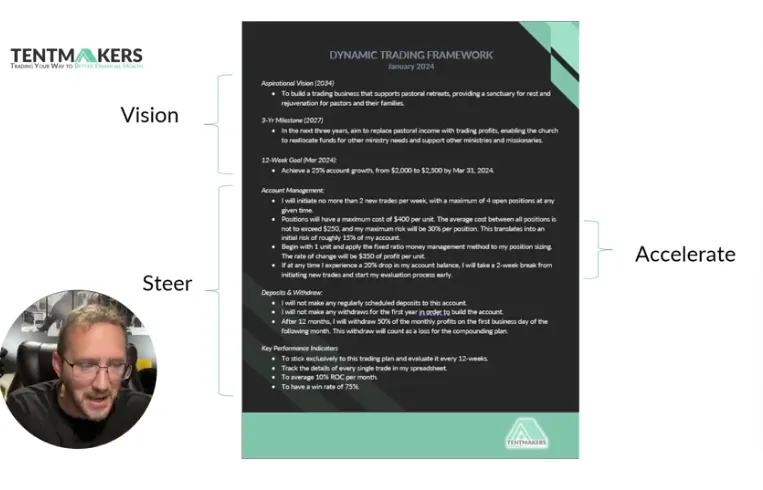
The Stocks for Pastors program is a complete system designed to help faith-based entrepreneurs create withdrawable income every month using options trading.
It’s not a hobby. It’s not guesswork.
It’s a repeatable process to build a lean, flexible business that pays like a second job, without pulling you away from your first calling.

You’ll know exactly what to do, when to do it, and how to manage it.
How It Works
This isn’t “set it and forget it” investing. This is business building, with tools, structure, and strategy.
Two Core Strategies: The Cash Flow Collective and The Double Canopy Strategy.
Weekly Trade Alerts: Follow along with exact setups for every strategy. Copy the trades of a professional in your own account with the click of a button.
Monthly Group Coaching: Live calls to review trades, sharpen your skills, and get your questions answered in real time.
Priority Email Support: Direct answers when you need them so you’re never trading alone.
What's Included
When you join the private community, you get full access to:
The Options Business Course:
Learn the full framework behind this income-generating model. Taught in clear, practical lessons.
Full Courses for Both Trading Strategies:
Master the complete playbook, from beginner-friendly methods to advanced setups, so you can adapt to any market condition.
Real-Time Trade Alerts:
Follow Michael’s actual trades each week. Know what to trade, when, and why.
Monthly Group Coaching Calls:
Get feedback, troubleshoot your trades, and grow with a like-minded community.
Unlimited Email Support:
Run your trading like a system, not a guessing game.
Supportive Private Group:
Be part of a network of pastors and ministry leaders building the same kind of freedom you are.
Additional Strategy Vault:
Learn bonus strategies for advanced traders who want to expand their trading arsenal.
Real Results. Real Income.
This isn’t theory. These are actual results.
Since launching the SFP Community in January 2021, Michael has placed hundreds of trades with a better than 70% win rate, using the same strategies shared in this program.
Average Monthly ROI: 5.9%!
Average Monthly Income: $477!
Only 2 Losing Months: 91.7% winning months!
That’s not flashy day trading. That’s consistent, repeatable income—built with focus, discipline, and a strategy that works.
If a $2,000 account can generate nearly $12K in profit in two years, imagine what this could mean for your family, your ministry, or your financial peace of mind.

While results are never guaranteed and losses are always possible, many members report profit potential in the $300–$400/month range within six months as they gain confidence and consistency.
PRICING
Choose Your Membership
Monthly
$197/mo
Beginner-friendly video course that walks you through every step
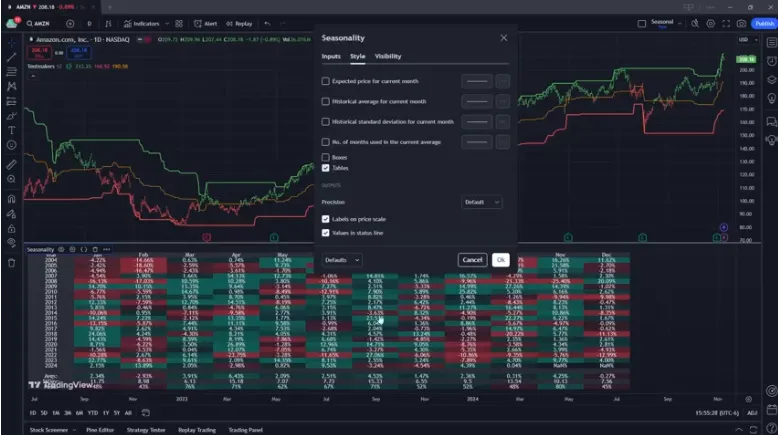
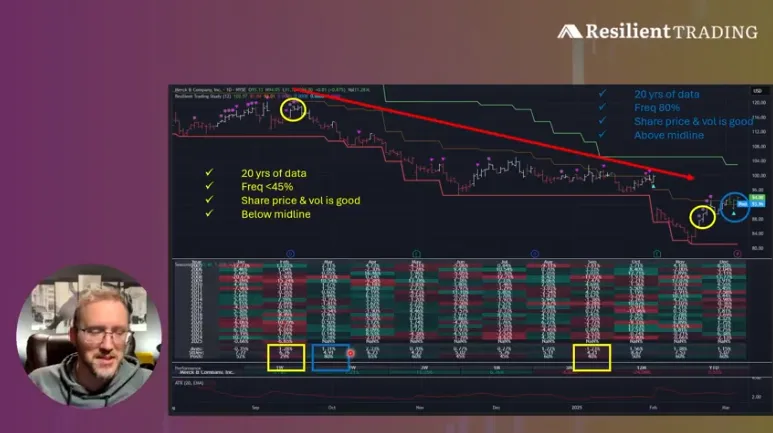
Monthly seasonal watchlist of high-probability stocks
Full courses for CFC and DCS strategies
Real-time alerts each week
Copy trading to save time
Access to member community
Monthly live group coaching call
7-Day Free Trial
Cancel Anytime

No contracts - cancel anytime
Semi-Annually
$997/6mos
Beginner-friendly video course that walks you through every step
Monthly seasonal watchlist of high-probability stocks
Full courses for CFC and DCS strategies
Real-time alerts each week
Copy trading to save time
Access to member community
Monthly live group coaching call
Get 1 month free
Bonus 1:1 onboarding video chat
No contracts - cancel anytime
Annually
$1,970/yr
Beginner-friendly video course that walks you through every step
Monthly seasonal watchlist of high-probability stocks
Full courses for CFC and DCS strategies
Real-time alerts each week
Copy trading to save time
Access to member community
Monthly live group coaching call
Get 2 months free
Bonus 1:1 onboarding video chat
No contracts - cancel anytime
For Christian Leaders Who Think Like Entrepreneurs

Wants to provide more for your family without overextending your time
Believes financial margin creates ministry freedom
Is ready to treat income generation with the same intentionality as discipleship
Doesn’t want hype, just a method that works
Is willing to learn, apply, and grow
You're not just looking to invest.
You're looking to build something that gives back.
What Members are saying

“I can't tell you how awesome it felt to close my first winning trade! Knowing that when I clicked that button, I would be able to use that profit for a much needed date night with my wife. Thank you!”
Jon. H.
“I've been doing pretty good with stocks, but learning how to trade options has taken things to a whole new level.”
Ben C.
“This has been exactly the kind of side-hustle I was looking for. I needed someone I could trust to teach me how to get more time back and stop doing side gigs that take hours of my time and eat away at my ministry focus. Plus, I make more money with this. A double win!"
Will D.
Imagine This...
What if you could earn an extra 5–10% every month from your trading account?
Not once in a while. Not someday. But consistently. Month after month. What would you do with that extra income? How would it change the way you care for your family? What would it free you from mentally, emotionally, even spiritually?
Maybe you'd finally take your spouse on that getaway.
Maybe you'd cover an unexpected bill without fear.
Maybe you'd support a missionary or fund a ministry dream that’s been on your heart for years.
Maybe you'd stop feeling like you're behind.
This isn’t about chasing riches. It’s about creating margin so you can serve God and others with peace and confidence.
Let’s build that future together!
Read Our Latest Blogs
Lorem ipsum dolor sit amet, consectetur adipiscing elit.

Biblical Boundaries: When Saying No Is Faithful
When Saying “No” Is an Act of Faithfulness
Biblical boundaries aren’t about protecting our comfort—they’re about stewarding our calling.
For a long time, I assumed that being available was part of being faithful. If someone needed help, I should help. If there was an opportunity to serve, I should serve. If something needed to be done and I was capable of doing it, saying “yes” seemed like the Christian response. Isaiah 6:8 became a sort of mantra for me, so I interpreted every presented need as an opportunity to show God that He could “send me”. Eventually, almost everything felt like my responsibility.
I remember one Sunday when I cooked breakfast for students, taught Sunday School, sang in the choir and special music, hosted church members for lunch, and was already preparing to host more people for dinner that evening. By the time I had a moment to think, I was completely spent.
None of those things were bad. That was what made the problem difficult to see. I wasn’t choosing between good and evil. I was choosing among good things, and I had quietly assumed that faithfulness meant saying yes to as many of them as possible.
But Jesus never lived that way.
Everyone Is Looking for You
Mark 1 records an extraordinary day in Jesus’ ministry. After teaching in the synagogue and healing Simon’s mother-in-law, Jesus spent the evening healing the sick and casting out demons. Mark tells us that “the whole city was gathered together at the door” (Mark 1:33, ESV).
The next morning, Jesus rose while it was still dark and went to a desolate place to pray. Eventually Simon and the others found Him.
“Everyone is looking for you.” (Mark 1:37, ESV)
There is pressure packed into that sentence: People need You. People are waiting. There is more work to do.
Yet, Jesus responds:
“Let us go on to the next towns, that I may preach there also, for that is why I came out.” (Mark 1:38, ESV)
And Jesus left.
Mark doesn’t tell us that every need in Capernaum had been met. Instead, Jesus moved forward because He understood the purpose of His ministry. He had come proclaiming the kingdom of God, and the existence of another need did not automatically determine where He would go next.
Jesus was governed by the mission the Father has given Him.
A Need Is Not Necessarily a Calling
That distinction can be difficult for those of us who genuinely love people. We see a need and immediately feel responsible for meeting it. Someone asks for help, and we feel guilty for even considering saying “no”. An opportunity appears and we assume that because we can do it, perhaps we should.
There will always be more needs than any one person can meet.
Paul tells believers in Ephesians to “look carefully then how you walk, not as unwise but as wise, making the best use of the time” (Ephesians 5:15–16, ESV), and then urges them to “understand what the will of the Lord is” (v. 17).
Paul’s concern is much bigger than calendar management. He’s calling believers to live wisely in light of who they have become in Christ. That wisdom must shape how we use the limited lives God has given us.
Wisdom doesn’t simply ask, Is this a good thing? It also asks, Is this part of what God has entrusted to me? Sometimes faithfulness requires saying “no” to something good so we can remain faithful to something God has already placed before us.
Jesus Wasn’t Governed by Everyone’s Expectations
We sometimes talk about boundaries as though their primary purpose is protecting our comfort, but when we look at Jesus, we find something much richer. No one could accuse Him of living for Himself. His entire ministry was marked by sacrificial love, ultimately leading Him to lay down His life for sinners. Yet He wasn’t governed by every demand around Him.
Luke tells us that as Jesus’ fame spread and great crowds gathered to hear Him and be healed, “he would withdraw to desolate places and pray” (Luke 5:16, ESV). The crowds were real. The needs were real. Jesus’ compassion was real, but so was His communion with the Father. Jesus did not allow the urgency of the crowd to replace obedience to the Father as the governing priority of His life. He knew why He had come, and that clarity allowed Him to distinguish between the demands surrounding Him and the mission entrusted to Him.
When Our “Yes” Becomes a Measure of Our Worth
Sometimes saying “no” is difficult for another reason. We’re not simply serving people; we’re looking to our service to tell us something about ourselves.
We think: If I’m needed, perhaps I’m valuable. If I’m always available, perhaps I’m faithful. If no one is disappointed with me, perhaps I’m doing this Christian life correctly.
Without realizing it, our “yes” can become another form of performance. Then saying “no” feels like more than declining an opportunity. It feels like failure. The gospel, however, frees us from needing our service to establish our worth.
Jesus didn’t merely model perfect obedience to the Father. He obeyed the Father perfectly where we have failed. Where our motives are mixed, His were pure. Where we have sought approval, He sought the Father’s will. His perfect obedience ultimately carried Him to the cross, where He bore our sin and accomplished what none of our service ever could.
Our standing before the Father isn’t secured by how many people need us, how much we accomplish, or how rarely we disappoint someone. It rests on the finished work of Christ.
We are free to serve without asking our service to save us.
Protecting the “Yes”
Once our identity is secure in Christ, we can begin looking at our responsibilities differently. Every “yes” costs something. Time and energy given to one responsibility cannot simultaneously be given to another. That means saying yes isn’t automatically generous. Sometimes an unnecessary “yes” to one opportunity becomes an unfaithful “no” to something God has already entrusted to us.
For me, healthy boundaries became less about protecting my comfort and more about protecting the “yes” God had already placed in front of me. My marriage, my children, my relationship with Christ, and the ministry responsibilities God had entrusted to me all required thoughtful attention. If I wanted to give those things a faithful “yes”, some other opportunities would have to receive a gracious “no”.
That doesn’t give us license to use boundaries as an excuse to avoid inconvenience. Following Jesus is costly. Love interrupts us. Ministry requires sacrifice. There will be seasons when obedience stretches us beyond what feels comfortable, but sacrifice and constant availability are not the same thing.
Faithfulness Is Not Constant Availability
Jesus shows us that faithfulness isn’t measured by whether every need has been met or every person is satisfied. It is measured by obedience to the Father.
So when another good opportunity appears, perhaps the first question we ask shouldn’t be, Can I do this? And it isn’t, Will someone be disappointed if I don’t?
The better question is, Has God actually entrusted this to me?
Sometimes the faithful answer will be “yes”. Sometimes it will be “no”. Neither answer makes us righteous before God; Christ has already secured our acceptance. That frees us to choose obedience rather than approval.
God has never asked us to be everything to everyone. He calls us to love people sacrificially while faithfully stewarding the people and responsibilities He has actually placed in our hands.
Healthy boundaries don’t keep us from faithfulness. Sometimes they’re exactly what make faithfulness possible.



© 2025 G6 Allies - All Rights Reserved


